The True Cost of RV Ownership: Loan, Insurance, and Maintenance

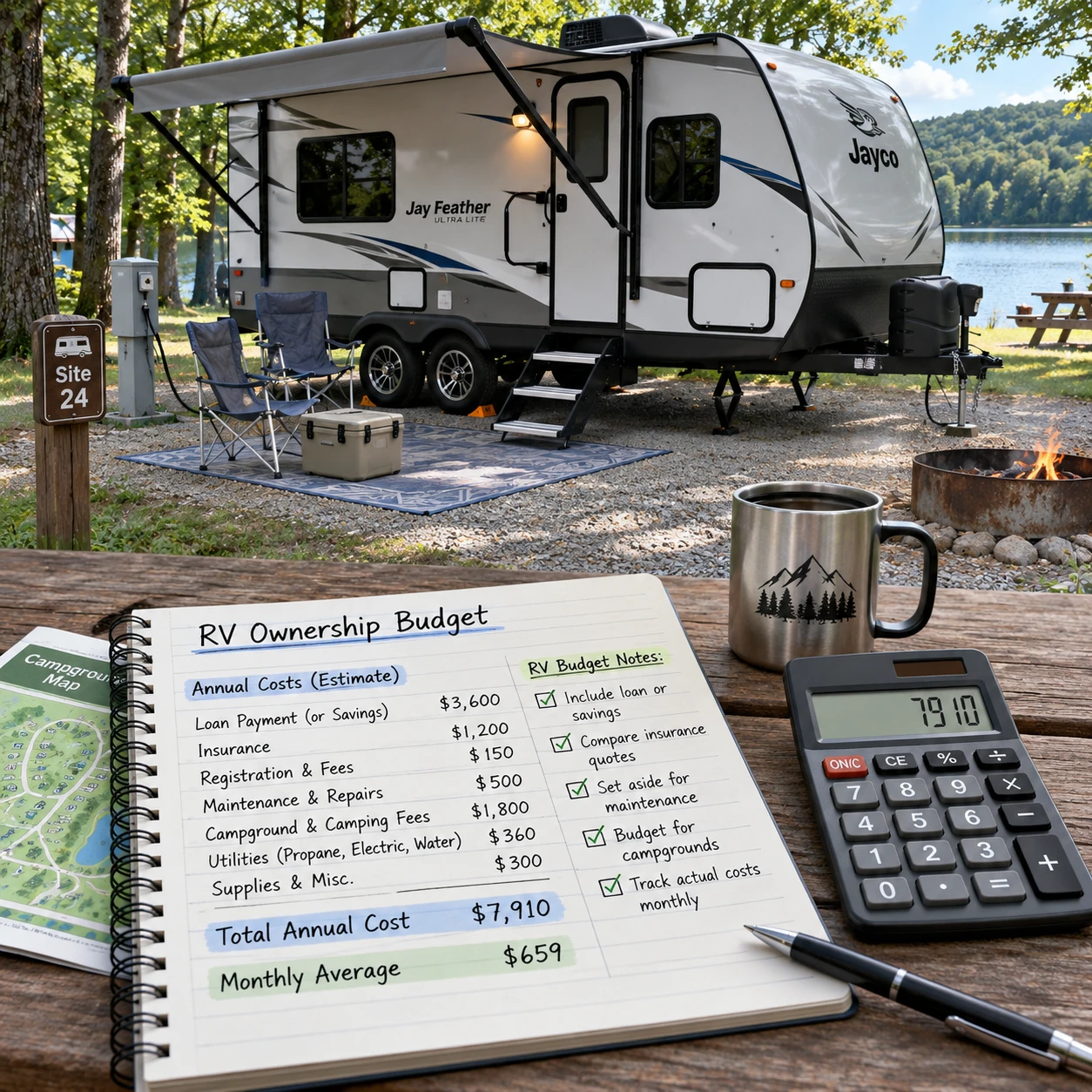
An RV’s purchase price is only the starting point. The true cost of RV ownership also includes financing, insurance, maintenance, depreciation, and expenses such as fuel, storage, taxes, and registration. Building a budget around the full picture helps you decide whether an RV fits your finances before you commit.
What Does It Really Cost to Own an RV?
The cost of owning an RV combines the purchase price and financing with recurring bills and occasional expenses. Your total depends on the RV type, how often you use it, where you keep it, and how you pay for it.
Start by separating costs into three groups:
- Fixed or predictable costs: loan payment, insurance, storage, and scheduled registration fees.
- Variable costs: fuel, campground fees, utilities, and routine service, which rise or fall with use.
- Irregular costs: repairs, replacement tires, appliance failures, and other work that may arrive without warning.
Depreciation is different from a monthly bill, but it still affects what ownership costs you. It represents the loss in resale value over time. For a useful comparison, track cash expenses separately from estimated depreciation, then include both when calculating the RV’s broader economic cost.
A motorhome, travel trailer, fifth wheel, and camper van can have very different costs. A motorhome may involve engine and chassis service; a towable RV may require a suitable tow vehicle and related upkeep. There is no single monthly figure that applies to every owner.
RV Loan Payments and Financing Costs
An RV loan payment is shaped mainly by the amount borrowed, the interest rate, and the loan term. A larger down payment reduces the principal, while a longer term may lower the monthly payment but increase total interest.
To estimate the payment, enter the purchase price, down payment, interest rate, and term into an RV loan payment calculator. Add any fees or taxes that will be financed to the loan amount. For example, a $60,000 RV with $10,000 down leaves $50,000 to finance before applicable fees; the actual payment still depends on the lender’s rate and repayment schedule.
Compare more than the monthly number. A longer loan term can make payments feel manageable while leaving you paying interest for longer. It can also mean owing more than the RV’s resale value if depreciation outpaces principal reduction, particularly early in the loan.
Before relying on a calculator result, check whether it assumes a fixed rate and monthly payments, and whether it includes taxes, fees, or optional products. Use a lender quote for final planning. Then test a few scenarios: a larger down payment, a different loan term, or a higher interest rate. The goal is to see how the choices change both monthly cash flow and total borrowing cost.
Insurance Costs and Coverage Considerations
RV insurance premiums vary by vehicle, owner, location, and usage, so an online estimate is a planning figure rather than a guaranteed quote. The RV’s type and value, where it is kept, and how often it is driven or occupied can all affect pricing.
Insurers may also consider driving history, claims history, coverage limits, deductibles, and whether the RV is used seasonally or as a full-time residence. A motorhome and a towable trailer have different insurance needs. Depending on the policy and circumstances, coverage may include liability, collision, comprehensive protection, and coverage for personal belongings or certain roadside events.
When comparing quotes, line up the coverage details rather than choosing by premium alone. A higher deductible may reduce the premium but leave you responsible for more after a covered loss. Likewise, a lower coverage limit may cost less while creating a larger financial exposure.
Get quotes using the same RV value, address, usage pattern, limits, and deductible. Ask an insurer how the policy treats storage periods, trips across state lines, full-time occupancy, and personal property. For a budget estimate, use a real quote when available and revisit it if your location or use changes.
Maintenance, Repairs, and Depreciation
Maintenance and repairs include planned service that keeps an RV roadworthy and unexpected work when components fail. Depreciation adds a separate ownership cost by reducing the RV’s value over time, even when no payment is due that month.
Routine needs vary by RV, but may include tire checks and replacement, battery care, inspections for roof or seal leaks, appliance servicing, and engine or generator maintenance where applicable. Follow the manufacturer’s maintenance schedule and keep records. Skipping small inspections can allow a minor issue, such as a worn seal, to develop into water damage that costs more to address.
Repairs are less predictable. Set aside a separate reserve rather than assuming routine service covers every problem. The right amount depends on the vehicle’s age, condition, complexity, and your ability to handle smaller jobs yourself. A newer RV may need less immediate repair work, but it still needs regular checks; an older RV may have a lower purchase price and greater repair uncertainty.
To estimate depreciation, compare the RV’s expected future resale value with its current purchase price over the period you plan to own it. This is an estimate, not a guaranteed resale outcome. Condition, mileage, market demand, and maintenance history can influence value. An RV depreciation calculator can help model scenarios, but avoid treating its result as an appraisal.
Other Costs to Include in Your Budget
Fuel, storage, registration, taxes, and trip-related charges can add substantially to the cost of RV ownership. Which expenses matter most depends on whether you travel often, store the RV at home, or pay for facilities and campgrounds.
- Fuel: Estimate annual miles, expected fuel economy, and a realistic fuel price. Towing weight, terrain, and driving habits can change consumption.
- Storage: Include a monthly or seasonal fee if you cannot park the RV at home. Check whether the storage arrangement meets any insurance or local requirements.
- Registration and taxes: Budget for recurring registration charges and applicable sales, use, or property taxes. Rules differ by state and locality, so confirm amounts with the relevant government agency.
- Campgrounds and utilities: Add site fees, electricity, water, dump-station charges, or memberships if they apply to your travel pattern.
- Tow vehicle costs: For a towable RV, account for any additional fuel, maintenance, or equipment expenses associated with the tow vehicle.
These items are easy to overlook because they may be paid per trip or once a year rather than every month. Convert annual and seasonal amounts into monthly equivalents for a fair comparison: divide an annual expense by 12, while keeping the due date visible so you have cash available when the bill arrives.
Estimate Your RV’s Total Ownership Cost
To estimate total RV ownership cost, combine monthly bills with annual and use-based expenses, then account separately for irregular repairs and depreciation. A calculator is most useful when its inputs reflect your actual RV, financing offer, insurance quote, and travel plans.
Use this practical sequence to build a first-pass budget:
- Calculate financing: Enter the price, down payment, interest rate, and loan term in an RV loan calculator. Record the payment and total interest estimate.
- Add fixed costs: Include an insurance quote, storage, and monthly equivalents for registration and taxes.
- Estimate use-based spending: Project annual miles, fuel, campground nights, and other trip expenses based on your likely schedule.
- Set aside maintenance funds: Use the RV’s maintenance history and condition to choose a reserve, then adjust it as real costs emerge.
- Model depreciation separately: Estimate a possible resale value at your planned ownership date and compare it with the purchase price.
An RV ownership cost calculator can organize these figures into monthly and annual views. Try at least two scenarios: your expected usage and a higher-cost case with more travel, a repair, or a change in insurance. Keep assumptions visible so you can update them when you receive a lender offer, insurance renewal, or service estimate.
For a cash-flow total, add the loan payment, insurance, monthly storage, and monthly equivalents of annual bills, plus expected fuel, campground, and maintenance spending. For a broader ownership-cost estimate, include depreciation and financing interest while avoiding double-counting the loan principal as both a payment and a separate purchase expense. The result will not predict every bill, but it can show whether the RV fits your budget under realistic conditions.
Frequently Asked Questions
What costs should I include in an RV ownership budget? Include the RV loan payment, insurance, routine maintenance, a repair reserve, fuel, storage, registration, taxes, campground or usage fees, and depreciation if you want to assess long-term economic cost.
How do I estimate my RV loan payment? Use the amount financed, annual interest rate, and loan term in a loan calculator. Add financed taxes or fees where applicable, and confirm the final payment with the lender.
What factors affect RV insurance costs? RV type and value, location, usage, driving and claims history, coverage limits, and deductibles may affect a premium. Request comparable quotes because insurers assess risk differently.
How can I budget for maintenance and depreciation? Follow the manufacturer’s service schedule, review the RV’s condition and repair history, and keep a separate repair reserve. Estimate depreciation by comparing the purchase price with a plausible future resale value, treating that figure as uncertain.