Comparing RV Loans: Banks vs. Credit Unions vs. Online Lenders

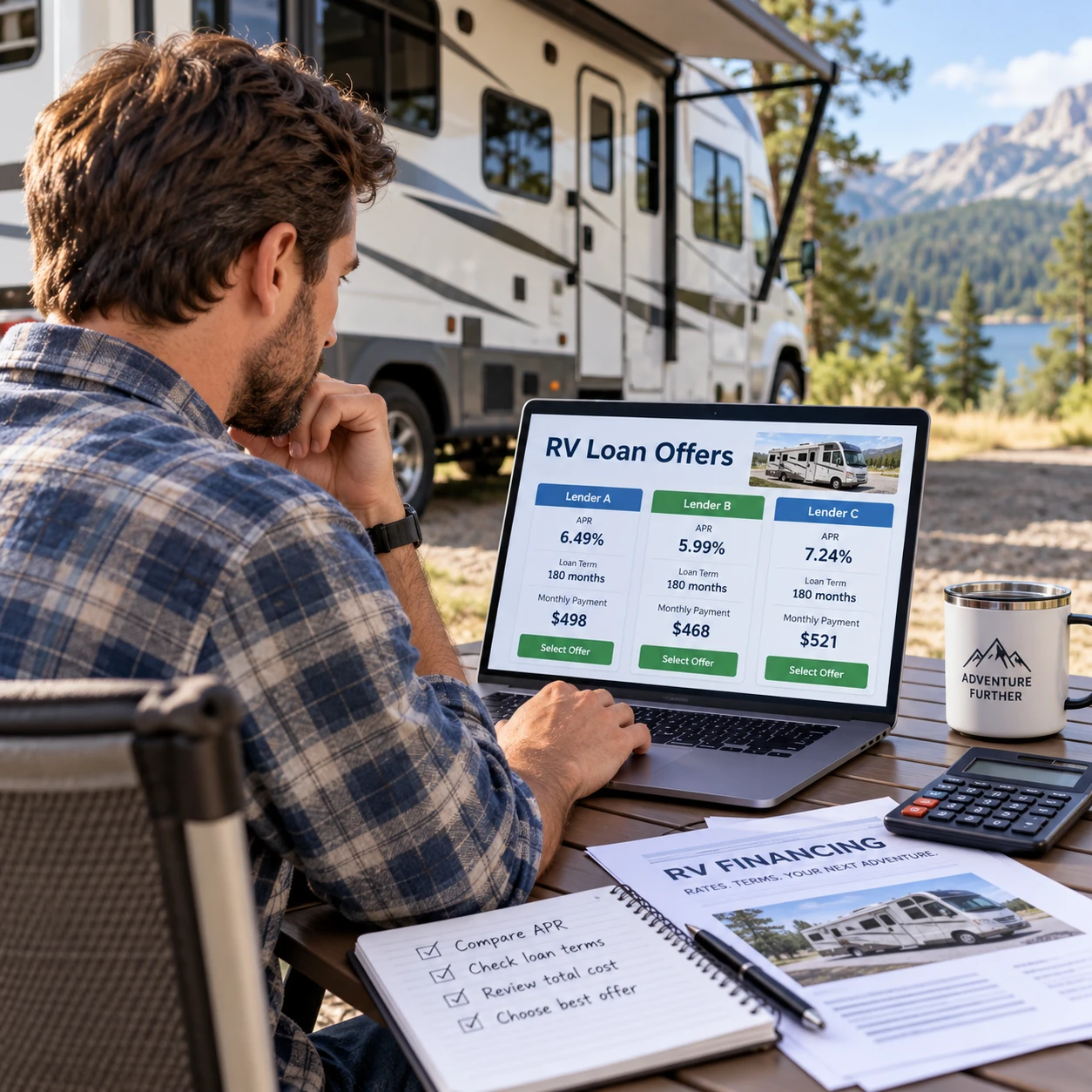
Choosing an RV lender means weighing more than the advertised interest rate. Banks, credit unions, and online lenders may differ in eligibility rules, fees, loan terms, and how they handle the application, so the right fit depends on your finances and the RV you plan to finance.
Compare each offer using the same loan amount and repayment period. That makes it easier to see whether a lower monthly payment reflects a genuinely better deal or simply a longer loan term.
What to compare when choosing an RV lender
Compare the APR, fees, loan term, eligibility requirements, and total repayment to understand the full cost of an RV loan. The APR helps account for interest and certain loan charges, while the monthly payment shows how the loan fits your budget.
Start with these details for each lender:
- APR and rate type: Check whether the rate is fixed or variable and whether the quoted APR is personalized or only an advertised example.
- Fees: Ask about origination, application, documentation, late-payment, and early-repayment fees. Not every lender charges the same fees.
- Loan term and amount: Confirm the available repayment periods and minimum or maximum borrowing amounts.
- Eligibility: Review credit score expectations, income documentation, debt obligations, and any vehicle restrictions.
- Loan conditions: Check whether the RV secures the loan, whether a down payment is required, and what happens if you pay early or miss a payment.
A low APR can still come with a higher total cost if the loan runs longer or includes substantial fees. Conversely, a shorter term may cost less overall but require a larger monthly payment. Compare both figures before deciding.
RV loans from banks
Banks may suit borrowers who value an established financial relationship, in-person service, or the convenience of managing payments alongside other accounts. Their RV loan requirements and terms vary by bank, so existing customer status does not guarantee approval or a lower APR.
A bank where you already have a checking or savings account may make it easier to discuss your finances or manage payments in one place. Some banks also provide branch support if you prefer to ask questions face to face. However, the bank may have narrower eligibility rules or lending options than you expect, and the application can require detailed information about income, debt, and the RV.
Ask whether the bank finances the specific RV category and age you are considering. Motorhomes, travel trailers, and other recreational vehicles may be treated differently, and an older or higher-mileage vehicle may not meet a lender’s criteria. Confirm whether the quoted offer depends on a particular down payment or credit profile.
Before applying, ask if the bank can provide a rate estimate using a soft credit inquiry or whether it will make a hard inquiry. A hard inquiry can affect your credit report, so it is useful to understand the process before authorizing one.
RV loans from credit unions
Credit unions can be worth comparing for their member-focused service and RV financing options, but you usually need to qualify for membership. Compare the complete loan offer, not only a prominently advertised rate.
Membership may be based on where you live or work, an association, or another eligibility connection. Some credit unions allow people to join through a qualifying organization or account, but requirements differ. Ask about any membership fees or account-opening conditions and include them when assessing the cost and convenience of borrowing.
A credit union may offer personal guidance or flexible service, though its RV loan products can be limited by loan amount, vehicle age, or type. Look at APR, fees, term limits, down payment rules, and repayment options alongside the rate. A rate available only to members with particular credit characteristics may not match the offer you receive.
Compare the conditions behind the quote. Ask whether the rate assumes automatic payments, a certain credit score, or a specific loan-to-value ratio. If you are considering a used RV, confirm the lender’s age and valuation rules before you submit a full application.
RV loans from online lenders
Online lenders offer a digital way to review RV financing and submit documents, which can be convenient if you want to handle the process remotely. Convenience alone does not establish value, so check the APR, fees, lender identity, and loan conditions carefully.
Some online lenders let you check estimated terms before completing a full application. Find out whether that initial check uses a soft inquiry and when a hard credit inquiry occurs. If you proceed, read the loan agreement for the interest rate, payment schedule, total repayment, and any charges that were not clear in the initial estimate.
Digital applications may make it easier to compare offers, but they can also leave you with fewer opportunities for an in-person explanation. Check how to contact customer support and how payments, account changes, and problems are handled. Verify that the lender is legitimate and that you understand who will service the loan after funding.
Online offers can have specific requirements for the RV’s condition, age, purchase source, or loan amount. Confirm those details before relying on a preliminary quote. A prequalification estimate is not a final approval, and the rate or amount may change after the lender reviews your credit, income, and vehicle information.
How to compare offers apples to apples
Compare offers using the same principal, loan term, and assumptions about fees and down payment. Then review both the monthly payment and total repayment, since a smaller payment can result from borrowing for longer.
Use this comparison sequence:
- Set a consistent loan amount. Base it on the RV price and the down payment you can realistically make, while accounting for any costs that will not be financed.
- Match the term. Compare lenders at the same number of months first. If terms differ, note that a longer term usually lowers the payment but can increase total interest.
- Record APR and fees. Include required charges and check whether the APR already reflects particular fees. Avoid counting the same charge twice.
- Compare payment and total cost. Review the scheduled monthly payment and total amount paid over the loan. Confirm whether the figures assume on-time payments and no extra charges.
- Check conditions. Note required membership, automatic payments, collateral, RV restrictions, and prepayment terms.
For example, if one offer has a lower monthly payment but a much longer term, it may cost more in total interest. Compare a second version with the shorter term before deciding. The best offer is one you can repay comfortably under its actual conditions, not simply the one with the most appealing headline number.
Estimate payments before you apply
An RV loan calculator estimates monthly payments and total repayment from the loan amount, APR, and term. Use it to test different down payments and loan periods before requesting formal offers.
Enter the amount you expect to borrow, rather than the RV’s full purchase price if you plan to make a down payment. Then test realistic APRs and terms. A larger down payment reduces the amount financed, while a shorter loan term generally raises the monthly payment and reduces the time interest accrues.
A calculator provides an estimate, not a lender quote. It may not include taxes, registration, insurance, lender fees, or other ownership costs, and the lender’s final APR may depend on your credit score, income, debt, and RV details. Use the result as a planning tool, then verify every figure with the lender.
Try a simple scenario check: calculate a payment with your planned down payment, then calculate it again with a larger down payment or a shorter term. If the first payment leaves little room for insurance, maintenance, and ordinary expenses, adjust the borrowing plan before applying. A lower payment is useful only if the overall loan cost and budget remain manageable.
Choosing the right lender for your situation
The right RV lender is the one whose verified terms fit your budget, eligibility, and preferred application process. Compare banks, credit unions, and online lenders side by side, then confirm the final terms directly before accepting an offer.
Use this checklist to narrow your options:
- Can you qualify for the lender and for the specific RV loan amount?
- Does the lender finance the RV’s type, age, condition, and purchase source?
- What APR, fees, down payment, and loan term apply to your situation?
- Can you afford the monthly payment while covering insurance and other regular expenses?
- What is the total repayment, and are there restrictions or charges for early repayment?
- How does the lender handle applications, customer support, billing, and account servicing?
Credit history and credit score can influence the APR, available loan amount, and approval decision, but lenders use different criteria. A larger down payment may reduce the amount you need to borrow, though it also ties up more cash. If an offer falls short, ask what specific factor affected it and whether changing the term, down payment, or loan amount would help.
Frequently asked questions about RV loans
RV loan details vary by lender and vehicle, so confirm the security, eligibility, and repayment terms in the written offer. These answers explain common considerations without assuming every lender follows the same rules.
Are RV loans secured or unsecured?
Many RV loans are secured by the vehicle, meaning the lender may have rights to the RV if you do not repay as agreed. Some lenders may offer unsecured financing, often with different eligibility, rates, or borrowing limits. Check the loan agreement to see whether the RV is collateral.
Does the type or age of an RV affect financing?
Yes. Lenders may set different rules for motorhomes, travel trailers, and other RVs, as well as for used vehicles or older models. Ask about eligible vehicle types, age limits, valuation, and purchase-source requirements before applying.
Should I choose the lowest monthly payment or the shortest loan term?
Choose a payment you can afford while comparing the total repayment over the full term. A longer term may lower monthly payments but increase total interest; a shorter term often means higher payments but less time accruing interest. Use a calculator to compare both outcomes.
Can I compare RV loan offers without applying?
Sometimes. Some lenders provide estimates or prequalification using a soft credit inquiry, while others require a formal application and hard inquiry to give a firm decision. Ask which type of credit check applies and remember that preliminary terms can change after verification.